
Table of Contents
- Quick Comparison: Best Botanical Skincare for Sensitive Skin
- How to Fix Damaged Skin Barrier with Natural Ingredients
- What Makes Botanical Skincare Safe for Reactive Skin
- Best Botanical Cleansers and Bars for Sensitive Skin
- Best Botanical Serums, Balms, and Moisturizers for Redness Relief
- Natural Skincare Routine for Sensitive Skin: A Simple Five-Step Plan
- How to Patch Test Natural Skincare Products Before You Commit
- Frequently Asked Questions
Last Updated: September 20, 2026
Quick Comparison: Best Botanical Skincare for Sensitive Skin
Finding the best botanical skincare for sensitive skin starts with one hard truth: "natural" and "gentle" are not the same thing. Essential oils, citrus extracts, and fragrant plant compounds trigger reactions in reactive skin just as often as synthetic ones do. At Wellnessandnaturalskin, we hear from customers who have reacted to products labeled natural, which is why ingredient transparency matters more than marketing claims.
| Product | Type | Key Ingredients | Price | Best For |
|---|---|---|---|---|
| Pure Tallow Balm | Balm | Grass-fed tallow, olive oil | $24.00 | Full-body barrier repair |
| Fragrance Free Essentials Kit | 5-piece set | Tallow, honey, pomegranate, emu oil | $133.95 | Building a complete routine |
| Whipped Shea Body Butter | Body butter | Shea, colloidal oatmeal, rice bran | $21.99 | Eczema-prone, very dry skin |
| Emu Oil Oatmeal Rosacea Soap | Cleansing bar | Emu oil, oatmeal, chamomile | $16.00 | Redness and rosacea-prone skin |
| Face & Body Cleansing Bar | Cleansing bar | pH-balanced, fragrance-free | $17.00 | Daily cleansing, shave prep |
How to Fix Damaged Skin Barrier with Natural Ingredients
A damaged skin barrier is repaired by removing irritants and rebuilding lipids, not by adding more products. The barrier is your skin's outer layer, a mix of ceramides, fatty acids, and cholesterol that holds water in and keeps irritants out. When it breaks down, you get transepidermal water loss, tightness, stinging, and visible redness.

The fix follows a simple order:
- Stop the irritants. Pause exfoliating acids, fragrance, and foaming cleansers for two weeks.
- Cleanse gently. Use a fragrance-free, pH-balanced bar like the Face & Body Cleansing Bar ($17.00), which is designed for sensitive skin and preserves the defense barrier.
- Replenish lipids. Apply an oil-rich balm to damp skin. The Pure Tallow Balm ($24.00) uses grass-fed tallow and organic olive oil, both rich in the fatty acids skin recognizes.
- Lock in moisture. Seal with a ceramide-rich or oatmeal-based cream at night.
What Makes Botanical Skincare Safe for Reactive Skin
Botanical skincare is safe for reactive skin when three conditions line up: the formula avoids known triggers, the soothing actives appear at meaningful concentrations, and the ingredients do not work against each other. Most guides stop at the first condition. The second and third are where reactions actually happen.

The soothing actives that earn their place
- Colloidal oatmeal, The FDA recognizes colloidal oatmeal as a skin protectant, which is why it shows up in eczema and rash products. It works by forming a protective film that reduces transepidermal water loss while its avenanthramides calm itch and redness. Look for it near the top of the ingredient list, not buried after fragrance.
- Shea butter, A plant-based emollient rich in stearic and oleic acids that restores elasticity and reduces the tightness that signals a compromised barrier.
- Calendula, Traditionally used for irritated skin; its triterpenoid saponins are the compounds most often cited for soothing support.
- Chamomile and evening primrose, Both supply gamma-linolenic acid (GLA), a fatty acid the skin uses to support its lipid barrier.
- Cold-pressed oils, The cold-press method preserves antioxidant compounds and vitamin E that heat extraction degrades. That is the practical reason cold-pressed matters, not just a label claim.
The triggers that hide in "natural" formulas
"Fragrance-free" beats "unscented," since unscented products can still contain masking fragrance. Beyond that, watch for these common botanical irritants:

- Essential oils, Citrus, lavender, peppermint, eucalyptus, and tea tree are frequent contact irritants. Linalool and limonene, both naturally occurring in many plant oils, are recognized fragrance allergens that must be disclosed on cosmetic labels in many markets.
- Citrus extracts and juices, The same compounds that make them smell fresh can be phototoxic, meaning they react with UV light and worsen irritation.
- Witch hazel with alcohol, The distilled version is mostly alcohol and strips the barrier; alcohol-free witch hazel is the safer form.
- Physical exfoliants, Ground nut shells, seeds, and salt scrubs create microtears that inflame reactive skin.
Ingredient interaction safety: what never to mix
This is the part most botanical guides skip. Even gentle actives can compound into irritation when layered incorrectly:
- Vitamin C + benzoyl peroxide or strong acids, The combination destabilizes vitamin C and multiplies irritation. Use them at different times of day.
- Retinol + exfoliating acids (AHA/BHA), Both accelerate cell turnover. Layering them on sensitive skin is a fast route to a damaged barrier. Alternate nights instead.
- Niacinamide + high-dose vitamin C, Some sensitive users flush when these are layered at full strength. Introduce one, wait two weeks, then add the other.
- Multiple botanical extracts in one routine, Each plant extract carries its own allergen profile. Stacking five "calming" botanicals increases your total allergen load even if each one is individually gentle.
Best Botanical Cleansers and Bars for Sensitive Skin
Cleansing is where most sensitive-skin routines fall apart. The right bar removes sweat, dirt, and pollution without stripping the lipid barrier, and it leaves skin soft rather than tight.
Best Botanical Serums, Balms, and Moisturizers for Redness Relief
Moisturizing is where botanical formulas separate themselves from the pack. The goal is moisture-locking without occlusion, so skin stays hydrated but can still breathe.
Apply balms and butters to damp skin within three minutes of toweling off. That window is when skin absorbs the most moisture, and it makes a thin layer go twice as far.
Natural Skincare Routine for Sensitive Skin: A Simple Five-Step Plan
A natural skincare routine for sensitive skin works best when it stays short. Five steps, twice a day, is enough. Adding more products increases your odds of a reaction without improving results. The goal is not to do more, it is to do the same gentle things consistently while your barrier rebuilds.
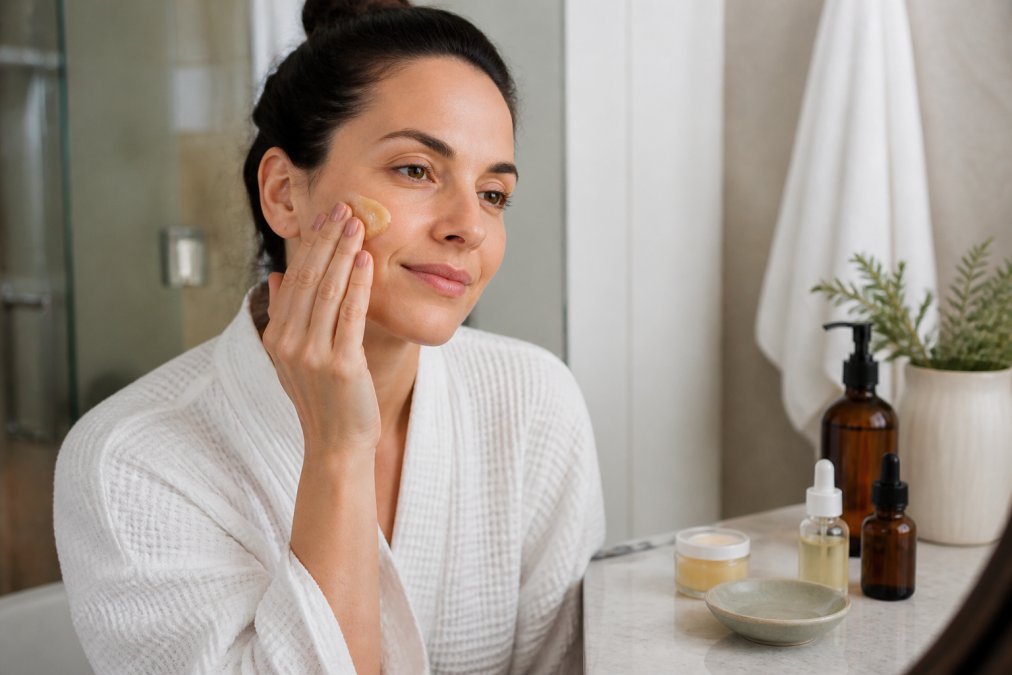
Morning
- Rinse with lukewarm water or a gentle cleansing bar. If your skin is very reactive, plain water is enough in the morning. Hot water strips lipids and triggers flushing.
- Apply a light moisturizer or balm to damp skin. Damp skin absorbs more and needs less product. A thin layer of a two-ingredient balm is often better tolerated than a multi-ingredient cream.
- Finish with sunscreen. Mineral filters (zinc oxide, titanium dioxide) are generally the better starting point for reactive skin because they sit on top of the skin rather than absorbing into it. Reapply every two hours outdoors.
Evening
- Cleanse with a fragrance-free bar or a mild botanical soap. Remove sunscreen and the day's buildup without stripping. If you wore heavy sunscreen, a gentle oil cleanse first, then the bar, reduces the need to scrub.
- Apply a barrier balm, then seal with a richer cream or overnight mask. The balm replenishes fatty acids; the cream or mask reduces water loss overnight, when skin does most of its repair.
Why the order matters
Each step has a job. Cleansing removes what damages the barrier. Moisturizing on damp skin traps water before it evaporates. Sealing with an occlusive layer slows transepidermal water loss while you sleep. Skip a step and the next one works harder than it should.
Pure Tallow Balm - Perfect for →
Seasonal adjustments for sensitive skin
Sensitive skin needs change with the weather, and most routines fail because they never adjust:
- Winter, Indoor heating drops humidity and pulls water from your skin. Switch to richer balms, add an occlusive layer at night, and pause exfoliation entirely. A humidifier in the bedroom does more for winter redness than most serums.
- Summer, Humidity and UV drive flushing and photosensitivity. Move to lighter layers, keep sunscreen as the non-negotiable step, and reapply rather than adding more products. If you use any citrus-derived botanical, save it for evening to avoid phototoxic reactions.
- Spring and fall, Pollen and temperature swings are common flare triggers. Keep the routine boring and resist the urge to try new actives during high-pollen weeks.
If you want the whole set in one purchase
The Sensitive Skin Fragrance Free Skincare Routine Essentials Kit ($133.95) bundles five fragrance-free items: a tallow and honey soap bar, clarifying toner, pomegranate glow serum, emu oil serum, and a mini tallow and honey cream. Buying a matched set removes the guesswork of checking every label for fragrance and essential oils, which is the single most common mistake in sensitive-skin routines.
How to Patch Test Natural Skincare Products Before You Commit
Patch testing is the only reliable way to know whether a botanical product will suit your skin, and it takes three days. Natural ingredients can still cause reactions, so never assume a plant-based formula is automatically safe.
Here is the protocol:
- Cleanse a small area on your inner forearm or behind your ear.
- Apply a pea-sized amount of the product and let it absorb.
- Leave it undisturbed for 24 hours.
- Check for redness, itching, burning, or bumps.
- If clear, repeat on the same spot for two more days.
- If still clear, apply to a small patch of your jawline before full-face use.
- Stop immediately and wash off if any reaction appears.
Patch test on the face, not just the arm. Facial skin is thinner and more reactive, so a product that passes the forearm test can still sting on your cheeks.
Frequently Asked Questions
What are the best natural skincare products for sensitive skin?
Start with fragrance-free, pH-balanced formulas and short ingredient lists. A gentle cleanser like the Face & Body Cleansing Bar ($17.00) removes dirt without stripping the barrier, while a balm such as the Pure Tallow Balm ($24.00) seals in moisture using just grass-fed tallow and organic olive oil. If you want a full set, the Sensitive Skin Fragrance Free Skincare Routine Essentials Kit ($133.95) bundles five fragrance-free steps for one price.
How can I tell if a botanical product is safe for my sensitive skin?
Read the full ingredient list before buying and look for terms like hypoallergenic, fragrance-free, and non-comedogenic. Botanical extracts and cold-pressed oils are generally well tolerated, but essential oils are a common trigger for reactive skin, so patch test first. Apply a small amount behind your ear or on your inner forearm, wait 24 to 48 hours, and check for redness, itching, or swelling before using it on your face.
What is the best way to repair a damaged skin barrier naturally?
Cut your routine back to a gentle cleanser and one moisturizer, then give it two to four weeks. The skin barrier is made of lipids, so plant-based emollients and ceramide-rich or tallow-based balms help replace what's missing and reduce transepidermal water loss. Avoid exfoliants, hot water, and anything with added fragrance until redness and tightness fade. A fragrance-free cleansing bar plus a whipped tallow balm is enough for most people.
Are botanical skincare products better for sensitive skin than synthetic ones?
Not automatically. What matters is the specific formula, not whether an ingredient is plant-derived or lab-made. Some botanical extracts cause reactions, and some synthetic ingredients are among the gentlest options available. Look for dermatologist-tested, fragrance-free products with soothing agents like colloidal oatmeal, shea butter, or calendula, and avoid anything that lists essential oils high on the label if your skin reacts easily.
Which botanical oils are non-comedogenic for sensitive skin?
Light, low-oleic oils tend to clog pores less. Rice bran oil, used in the Whipped Shea Body Butter with Colloidal Oatmeal ($21.99), and organic extra virgin olive oil in the Pure Tallow Balm ($24.00) are both options that moisturize without a heavy finish. Avoid thick coconut-derived oils on acne-prone areas of the face. If you have hormonal breakouts, keep facial oils to a thin layer at night and patch test for a week before adding a second product.