
Table of Contents
- Quick Comparison: Toxin Free Skincare Kits and Prices
- How to Identify Toxic Ingredients in Skincare
- Best Alternatives to Harsh Chemical Skin Treatments
- 1. The Daily Duo: Foaming Face Wash + Vitamin E Moisturizer
- 2. "Power of Three" Skincare Bundle
- 3. Dry Skin Hydrating Routine Kit
- 4. Acne Skin Kit - Full Routine
- 5. Sensitive Skin Fragrance Free Skincare Routine Essentials Kit
- A Framework for Choosing Your Kit
- Frequently Asked Questions
Last Updated: September 24, 2026
Quick Comparison: Toxin Free Skincare Kits and Prices
Shopping for toxin free skincare online comes down to reading labels carefully and matching a kit to your skin type. Wellnessandnaturalskin built its entire catalog around formulas free from harsh chemicals, so every kit below is a realistic starting point. The five picks in this guide range from a simple two-step routine to a full six-piece acne system.
Here is the short version before we get into ingredient labels.
| Kit | Price | Pieces | Best For |
|---|---|---|---|
| The Daily Duo | $54.00 | 2 | Simple daily routine |
| "Power of Three" Bundle | $125.00 | 3 | Cleanser, toner, moisturizer |
| Dry Skin Hydrating Kit | $163.96 | 5 | Dry, tight skin |
| Acne Skin Kit | $143.94 | 6 | Breakout-prone skin |
| Sensitive Skin Kit | $133.95 | 5 | Reactive, easily irritated skin |
How to Identify Toxic Ingredients in Skincare
Identifying toxic ingredients in skincare starts with the back label, not the front of the box. Terms like "natural," "clean," and "botanical" have no legal definition in the United States, so the ingredient list, the INCI (International Nomenclature of Cosmetic Ingredients) declaration, is the only reliable source. Everything above it is marketing.

The Four Groups That Cause the Most Trouble
- Parabens (methylparaben, propylparaben, butylparaben): preservatives used to stop mold and bacteria. They are effective, which is why they are everywhere, but reactive skin often flags them.
- Phthalates (often listed as "fragrance" or "parfum"): plasticizers that help scent linger. Because the U.S. does not require individual fragrance components to be disclosed, phthalates can hide inside a single word.
- Sulfates (sodium lauryl sulfate, sodium laureth sulfate): surfactants that create foam. They strip the skin barrier and leave it tight, which is why soap-free cleansers are the default for sensitive skin.
- Formaldehyde releasers (DMDM hydantoin, diazolidinyl urea, quaternium-15): preservatives that slowly release formaldehyde over time. They are legal, common, and a frequent trigger for contact dermatitis.
Fragrance deserves its own warning. "Synthetic fragrance" can contain dozens of undisclosed compounds, and fragrance is one of the most common causes of allergic contact dermatitis in skincare. That is why fragrance-free formulas, not "unscented" ones, which can still contain masking fragrance, are the safer bet for anyone who reacts easily.
A Repeatable Label-Reading Method
You do not need to memorize hundreds of names. You need a three-step filter you can run in under a minute:
- Scan the last five ingredients first. Preservatives, fragrance, and stabilizers sit at the end of the list because they are used in the smallest amounts. That is where most problem ingredients hide.
- Flag anything you cannot pronounce or identify. If you cannot say what a word does, look it up before you buy. "Plant-derived" on the front does not mean every ingredient on the back is plant-derived.
- Cross-reference against a public safety database. The Environmental Working Group's Skin Deep database lets you search by ingredient name and see hazard ratings in plain language. It is not perfect, ratings are based on hazard, not on your personal sensitivity, but it catches the obvious offenders fast.
A common mistake is trusting the front label. A product can say "plant-based" and still contain synthetic preservatives, and it can say "fragrance-free" while using essential oils that irritate skin just as much. The back label tells the truth.
What "Toxin-Free" Actually Means in Practice
There is no federal standard for the word "toxin-free." The FDA regulates cosmetics for safety and labeling, but it does not certify products as toxin-free, and no single agency approves the term. In practice, "toxin-free" is a marketing shorthand for formulas that avoid a commonly agreed list of ingredients, parabens, phthalates, sulfates, formaldehyde releasers, and synthetic fragrance. When you see the term, treat it as a claim to verify against the ingredient list, not a guarantee.
That is also why third-party certifications matter more than front-label claims.
Best Alternatives to Harsh Chemical Skin Treatments
The best alternatives to harsh chemical skin treatments rely on gentle exfoliation and barrier support instead of stripping acids and abrasives. Papaya enzymes, willow bark, and plant oils do the same work with far less irritation.
- Replace a glycolic acid peel with an enzyme cleanser that loosens dead cells gradually
- Swap a foaming sulfate wash for a soap-free, pH-balanced cleanser
- Trade astringent toners for a hydrating toner with no alcohol
- Use plant oils and butters instead of heavy occlusive creams
1. The Daily Duo: Foaming Face Wash + Vitamin E Moisturizer
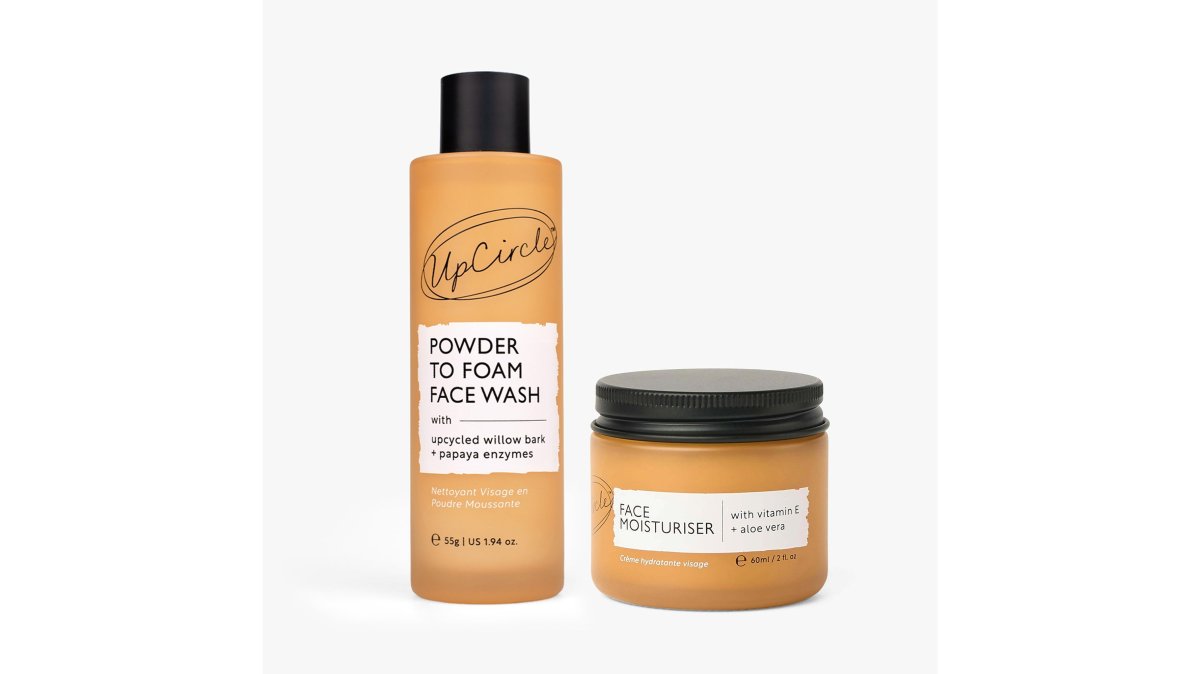
The Daily Duo is the simplest way to start a toxin free skincare routine. It pairs a Powder to Foam Face Wash with Willow Bark and Papaya Enzymes with the brand's award-winning Face Moisturizer with Vitamin E, and both are gentle enough for morning and night.
2. "Power of Three" Skincare Bundle
The "Power of Three" bundle covers the three steps most routines actually need: cleanser, toner, and moisturizer. It suits beginners building a first routine and seasoned users who want a complete daily set in one purchase.

Price: $125.00.
3. Dry Skin Hydrating Routine Kit
The Dry Skin Hydrating Routine Kit is built for tight, flaky, or thirsty skin. It runs five pieces from cleansing oil through to cream, so every step adds moisture rather than removing it.
The Daily Duo: Foaming Face Wash + →

Price: $163.96.
4. Acne Skin Kit - Full Routine
The Acne Skin Kit is a six-piece system for breakout-prone skin, covering cleansing, toning, treating, and moisturizing in one box. It includes Clarifying Cleansing Oil, Charcoal Clarifying Soap, Clarifying Toner, Blue Balance Serum, Clarifying Spot Treatment Serum, and Emu Oil.
Price: $143.94.
5. Sensitive Skin Fragrance Free Skincare Routine Essentials Kit
The Sensitive Skin Fragrance Free Kit is the safest starting point for reactive skin. Every piece is fragrance-free, which removes the most common trigger for redness and rashes.
Price: $133.95.
A Framework for Choosing Your Kit
Match the kit to your main skin concern, not to the biggest box. Buying more steps than you will use wastes money and adds irritation risk, because every additional product is another chance for your skin to react to something.
Start With Your Primary Concern
- Normal skin, first routine: The Daily Duo at $54.00. Two steps, no guesswork, and a formula gentle enough for sensitive skin.
- Want a full three-step set: "Power of Three" at $125.00. Cleanser, toner, and moisturizer in one box with no gaps between steps.
- Dry or tight skin: Dry Skin Hydrating Kit at $163.96. Five pieces that layer hydration at every step, ideal for winter or dry climates.
- Breakout-prone skin: Acne Skin Kit at $143.94. A full six-piece routine with a dedicated treatment serum, not just a single spot product.
- Reactive or easily irritated skin: Sensitive Skin Kit at $133.95. Fragrance-free, dye-free, and short on ingredients, the safest starting point for skin that reacts easily.
The 30-Day Transition: What to Expect When You Switch
Most guides stop at "pick a kit." The harder part is the first month, when your skin adjusts to formulas that do not rely on the harsh surfactants and preservatives it may be used to. A common pattern looks like this:
- Days 1-7: Skin may feel calmer or, occasionally, slightly drier as it adjusts to a soap-free cleanser. This is normal. Do not add a new active to compensate.
- Days 8-14: Breakouts can surface briefly as the barrier rebalances. Resist the urge to add an acid peel or strong exfoliant on top of the new routine, stacking actives is the fastest way to irritate skin that is already adjusting.
- Days 15-30: Most people see calmer, more consistent skin by the end of the first month. If irritation persists past 30 days, the culprit is usually one specific ingredient, not the whole routine. Reintroduce products one at a time to isolate it.
Sustainability and Packaging: The Angle Most Guides Skip
Shoppers moving from conventional products often worry that natural formulas are weaker. In practice, the opposite is usually true for daily use. The goal is not a stronger product; it is a routine your skin can tolerate every day without needing a recovery period.
Frequently Asked Questions
What should I look for when buying toxin-free skincare?
Look for short ingredient lists with recognizable plant-based names. Avoid parabens, phthalates, synthetic fragrance, and sulfates. Brands that disclose full ingredient sourcing are more trustworthy than those using vague 'natural' claims.
Are organic skincare kits better for sensitive skin?
Organic kits often skip synthetic additives that trigger reactions. Fragrance-free formulas like the Sensitive Skin Fragrance Free Skincare Routine Essentials Kit ($133.95) use tallow, honey, and emu oil to calm reactive skin. Patch-test new products on your inner arm for three days before applying to your face.
How can I verify if a skincare kit is truly non-toxic?
Cross-reference every ingredient against the Environmental Working Group's Skin Deep database. Avoid products listing 'fragrance' or 'parfum' without specifying the source, since synthetic fragrance can contain dozens of unlisted chemicals.
What are the most common toxic ingredients to avoid in skincare?
Parabens, phthalates, synthetic fragrance, sodium lauryl sulfate, and formaldehyde releasers top the list. Choosing paraben-free and sulfate-free formulas reduces your exposure significantly.
How do I transition from conventional to clean skincare?
Replace one product at a time, starting with your cleanser. Use up your current moisturizer while introducing a toxin-free alternative. This lets your skin adjust and helps you identify any reactions. Most people see calmer, more balanced skin within four to six weeks of switching.