
Table of Contents
- What Makes an Osea Alternative Actually Worth Switching To
- Quick Comparison: Glow-Boosting Formulas at a Glance
- Best Clean Skincare Brands for Anti-Aging: What to Look For
- How to Build a Natural Skincare Routine for Radiance
- Ingredient Sensitivity: Who Should Skip Which Formula
- Application Techniques for Different Climates and Skin Types
- Long-Term Barrier Repair: What Radiant Skin Glow Actually Requires
- Choosing Your Glow Routine
- Frequently Asked Questions
Last Updated: October 1, 2026
What Makes an Osea Alternative Actually Worth Switching To
This guide from Wellnessandnaturalskin breaks down the three ingredients that drive a radiant skin glow, then compares formulas you can buy today.
The Three Ingredients That Drive Visible Glow
Three ingredient families do most of the heavy lifting: vitamin C for brightness, essential fatty acids for barrier support, and humectants like hyaluronic acid for hydration.
- Vitamin C and its derivatives interrupt excess pigment production, which is why they fade dark spots over time.
- Omega-6 and omega-9 fatty acids from cold-pressed botanical oils keep the moisture barrier intact so water stays in the skin.
- Humectants pull water into the upper layers, giving skin that plump, lit-from-within look.
Texture, Absorption, and the Non-Greasy Test
Texture decides whether you'll use a product daily; a serum that pills under sunscreen gets abandoned within a week.
Quick Comparison: Glow-Boosting Formulas at a Glance
Price alone tells you almost nothing about whether a formula will deliver a radiant skin glow. Two oils at the same price can behave completely differently depending on molecular weight, fatty acid profile, and whether the actives are stabilized. The table below adds the columns most comparison posts leave out: mechanism, texture, and who should skip it.
| Product | Price | Hero Ingredient | Mechanism | Texture / Absorption | Best For | Skip If |
|---|---|---|---|---|---|---|
| Supernutrient Oil | $36.00 | Pumpkin Seed Peptides, 3% Vitamin C | Peptides support elasticity; vitamin C interrupts pigment clustering | Medium-weight, sinks in within 2-3 minutes | Daily radiance, all skin types | You react to essential oils or botanical fragrance |
| Advanced Brightening Moisturizer | $38.00 | Hyaluronic Acid, Ceramides, Vitamin C | Humectant draw + lipid replenishment + antioxidant | Light cream, no pilling under SPF | Dullness and dry patches | You want a single-step routine (this needs an occlusive on top in winter) |
| Prickly Pear Seed Oil | $40.00 | Vitamin E, Omega-6 and Omega-9 | Fatty acids rebuild the lipid barrier; tocopherol limits oxidative stress | Very lightweight, closest to a dry-touch finish | Anti-aging, firming, oily and acne-prone skin | You want a heavy overnight seal |
| Arencia Holy Hyssop Serum 12 | $14.99 | 12% Vita ACE Complex | Water-soluble brightening actives at a lower dose | Watery serum, absorbs in under a minute | Budget brightening, humid climates | You need barrier repair (no lipid component) |
| Sungboon Editor PDRN Ampoule | $21.99 | Salmon PDRN, Vitamin B12 | Nucleotide signaling aimed at firmness and fullness | Slightly tacky until fully dry | Firmness and fullness | You avoid animal-derived ingredients |
| Hydrating Face Oil with Coffee Extract | $28.00 | Jojoba, Sea Buckthorn, Rosehip | Jojoba mimics sebum; sea buckthorn and rosehip supply omega fatty acids | Medium, leaves a soft film | Occlusive sealing step at night | You want a matte daytime finish |
| BioLumin-C Vitamin C Serum | $212.40 | Vitamin C Complex, Lactic Acid | Antioxidant brightening plus mild exfoliation | Lightweight serum, can sting on compromised skin | Intensive brightening | Your barrier is already irritated |
How to Read This Table for Your Skin
- Dullness without dryness: prioritize vitamin C and humectant rows (Advanced Brightening Moisturizer, Arencia Holy Hyssop Serum 12).
- Tight, flat skin: prioritize lipid rows (Prickly Pear Seed Oil, Hydrating Face Oil with Coffee Extract).
- One product for both: the Supernutrient Oil is the closest single-bottle compromise.
- Layering: water-based serums first, oils last. Reversing that order is why an oil 'just sits on top' of skin.
Best Clean Skincare Brands for Anti-Aging: What to Look For
Clean skincare brands for anti-aging earn that label through formulation choices, not marketing claims. But the standard checklist, cold-pressed oils, short ingredient lists, no synthetic fragrance, is where most guides stop: a short list can still contain an essential oil that triggers contact dermatitis, and a cold-pressed oil can still oxidize before you finish the bottle.

The Sensitivity Layer Most 'Clean' Guides Skip
Seaweed-based and botanical-heavy formulas carry a risk profile generic clean-beauty advice ignores. Three categories account for most reactions:
- Essential oils and fragrance components. Limonene, linalool, and citronellol are natural, legally disclosable fragrance allergens. They appear in many 'clean' serums and commonly cause redness and itching. If a label lists 'natural fragrance' without naming components, treat it as unknown rather than safe.
- High-dose ascorbic acid. Vitamin C above roughly 15-20% is acidic enough to sting on a compromised barrier. The FRANKLY Vitamin C 23 Serum ($35.00) works well for resilient skin and poorly for reactive skin, the ingredient isn't the problem, the dose is.
- Marine and algal extracts. Seaweed-derived ingredients are generally well tolerated, but anyone with a known shellfish or iodine sensitivity should patch test first, since cross-reactivity is possible even when the extract is plant-based.
Barrier Repair Is the Real Anti-Aging Mechanism
Most anti-aging marketing sells collagen stimulation and firmness. The mechanism that shows up day to day is barrier repair, the one clean-beauty content rarely explains.

- Ceramides replace the missing lipid. Look for them high in the list, not after the preservative.
- Omega-6 and omega-9 fatty acids from oils like prickly pear, rosehip, and sea buckthorn supply the fatty acid portion.
- Cholesterol appears in some barrier-focused moisturizers; it's the piece most formulas omit.
- Humectants (hyaluronic acid, glycerin) pull water in, but only help if the lipid layer is intact enough to hold it. On a damaged barrier they can draw water out in very dry air.
What to Actually Check Before You Buy
- Named actives with percentages. 'Vitamin C' means little; '3% vitamin C' tells you the dose and lets you compare across brands.
- Cold-pressed extraction. Heat degrades delicate antioxidants, so cold-pressed oils retain more of what you're paying for, but check the expiration date, since they go rancid faster.
- Fragrance disclosure. 'Fragrance-free' and 'unscented' are not the same claim; unscented products can contain masking fragrance.
- Third-party testing language. Dermatologist-tested and dermatologically approved are claims a brand must support; vague 'clinically proven' language usually isn't.
Peptide-infused and antioxidant-rich formulas often address brightness, barrier, and texture at once.
How to Build a Natural Skincare Routine for Radiance
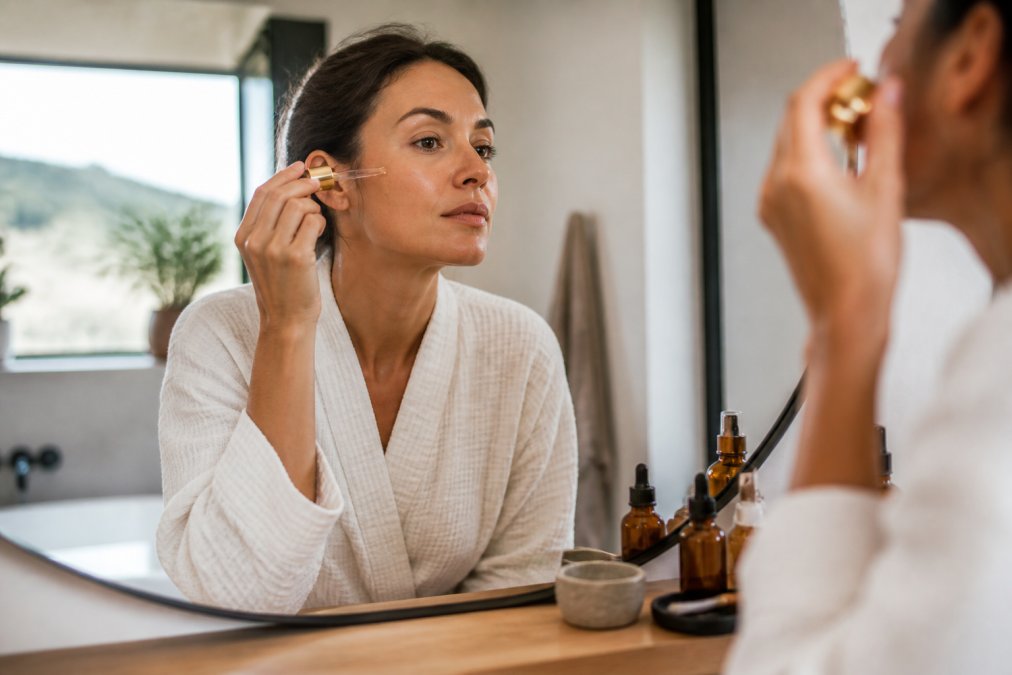
A radiance-focused routine is simpler than most people expect: cleanse, treat, hydrate, seal. Four steps, morning and night, with one exfoliation session per week.
Morning: Brighten and Protect
Start with a gentle cleanse, then apply a vitamin C serum while skin is still slightly damp.
Evening: Repair and Seal
Evenings are for repair. After cleansing, layer a treatment serum, then lock everything in with an oil.
Advanced Brightening Moisturizer →
Ingredient Sensitivity: Who Should Skip Which Formula
Sensitive skin needs a slower approach. High-concentration vitamin C, essential oils, and chemical exfoliants are the most common triggers.
- Prickly pear seed oil is well tolerated by most skin types, including oily and acne-prone skin, because it's non-comedogenic and rich in soothing phytosterols.
- Hydrating Face Oil with Coffee Extract ($28.00) uses jojoba, sea buckthorn, and rosehip, and is dermatologically approved, which makes it a reasonable starting point.
- Skip 23% vitamin C formulas if you've reacted to ascorbic acid before. The FRANKLY Vitamin C 23 Serum ($35.00) is potent; sensitive skin should apply it over moisturizer rather than directly on clean skin.
Introducing three new actives in the same week is the fastest way to trigger a reaction and lose track of which product caused it. Add one new product every ten days.
Application Techniques for Different Climates and Skin Types
Humidity changes how much product your skin needs: in dry climates, layer more; in humid ones, layer less and choose lighter textures. This gap most comparison articles skip matters more than brand loyalty.
- Dry or cold climates: Apply oil before moisturizer, not after, to pull water into the skin rather than sealing over dry skin.
- Humid climates: Switch to a lightweight serum and skip the occlusive oil during the day. The Arencia Holy Hyssop Serum 12 ($14.99) has a lightweight, fast-absorbing texture built for this.
- Oily and combination skin: Use humectant serums in the morning and reserve oils for night only.
- Mature or very dry skin: Layer a peptide-infused oil over a ceramide moisturizer to address both barrier repair and firmness.
Long-Term Barrier Repair: What Radiant Skin Glow Actually Requires
Practical habits that support barrier repair:

- Use a ceramide moisturizer every morning, not just when skin feels tight
- Never apply exfoliating acids to damp, freshly cleansed skin
- Add an occlusive oil at night during dry seasons
- Give a new routine four to six weeks before judging results
- Reduce active frequency at the first sign of stinging or redness
For context on how the category is regulated and what "clean" can and cannot legally mean on a US label, the Environmental Working Group's Skin Deep database remains a widely used reference for ingredient screening.
Choosing Your Glow Routine
Building a routine that delivers a radiant skin glow comes down to matching ingredients to your skin's real needs, not chasing the most expensive bottle on the shelf. Wellnessandnaturalskin curates plant-based formulas free from harsh chemicals and artificial toxins, sourced from vetted suppliers, so you can build brightness, hydration, and barrier support in one routine. Start with the Advanced Brightening Moisturizer ($38.00) for daily luminosity and the Supernutrient Oil ($36.00) to seal it in overnight.
Frequently Asked Questions
What is comparable to Osea products for a radiant glow?
The Supernutrient Oil at $36 delivers pumpkin seed peptides, 3% vitamin C, jojoba, and cloudberry oil for a silky finish without greasiness. The Advanced Brightening Moisturizer at $38 pairs hyaluronic acid and ceramides with Kakadu plum and desert lime to support luminosity and barrier strength.
What ingredients should I look for in a natural body serum or face oil?
Prioritize three categories. First, humectants like hyaluronic acid that attract moisture. Second, emollients such as jojoba and prickly pear seed oil rich in omega-6 and omega-9 fatty acids that soften and support the moisture barrier. Third, antioxidant-rich actives like vitamin C, vitamin E, and ferulic acid that defend against dullness. The FRANKLY Vitamin C 23 serum combines 23% ascorbic acid with ferulic acid and niacinamide for brightening at $35.
Are there affordable alternatives to Osea for glowing skin?
Yes. Several formulas under $40 deliver comparable glow benefits. The Arencia Holy Hyssop Serum 12 at $14.99 uses a 12% Vita ACE Complex with niacinamide to brighten dull skin. The Hydrating Face Oil with Coffee Extract at $28 blends jojoba, sea buckthorn, and rosehip oils to boost collagen and fade dark spots. The Sungboon Editor PDRN Pink Vitamin Glow Boosting Ampoule at $21.99 combines salmon PDRN, collagen, and hyaluronic acid for a fuller, hydrated look.
How do I choose a clean skincare brand for anti-aging that won't irritate sensitive skin?
Start with the ingredient list, not the label. For reactive skin, patch test any vitamin C serum above 15% concentration, since higher percentages can sting. The BioLumin-C Vitamin C Serum uses two stable forms of vitamin C with lactic acid and hyaluronic acid, and it is free from parabens, phthalates, and sulfates. Introduce one active at a time over two weeks.
How long does it take to see a radiant skin glow from a natural routine?
Surface hydration and a temporary luminosity boost can show within days, especially from humectants like hyaluronic acid. Changes to skin texture, dark spots, and elasticity take longer because they depend on cell turnover, which runs roughly every 28 days in adults. Formulas with vitamin C, niacinamide, and peptides need consistent daily use for four to eight weeks before tone and firmness shift. Photograph your skin in the same lighting each week to track real progress.