
Table of Contents
- Why Shoppers Look for VegOut Organics Alternatives
- Quick Comparison: Plant-Based Skincare Picks at a Glance
- A Clean Beauty Ingredient Guide for Reading Labels
- Natural Alternatives to Harsh Chemical Exfoliants
- Skin-Type Specific Recommendations
- Plant-Based Skincare Routine for Beginners
- Price-Per-Ounce and Sustainability: What You're Paying For
- Conclusion: Choosing Your Plant-Based Skincare Swap
- Frequently Asked Questions
Last Updated: October 4, 2026
Why Shoppers Look for VegOut Organics Alternatives
That skepticism is earned. The clean beauty market has grown fast, and with growth comes noise: vague sourcing claims, "natural" labels on synthetic-heavy formulas, and price tags that don't match what's inside the jar.
Below, we break down how to read a clean beauty ingredient guide, compare formulas at the ingredient level, match picks to your skin type, and run price-per-ounce math, where most alternatives lists quietly fall apart.
Quick Comparison: Plant-Based Skincare Picks at a Glance
Here's the fastest way to see how our plant-based skincare lineup maps to common skin concerns and budgets.
| Product | Price | Best For | Key Ingredient Focus |
|---|---|---|---|
| Bakuchiol Skin Renewing Facial Oil | $35.00 | Fine lines, sensitive skin | Bakuchiol, squalane, chia seed oil |
| Cleansing Face Milk with Oat Powder + Aloe Vera | $30.00 | Sensitive, reactive skin | Upcycled oat powder, aloe vera |
| Bamboo Microdermabrasion Exfoliating Cleanser | $23.00 | Dull, congested skin | Bamboo stem extract, lactic acid |
| "G.O.A.T." Milk Cleanser | $40.00 | Dry, tight skin | Goat's milk, oats, honey |
| "CuCu" Cucumber Cleanser | $45.00 | Oily, inflamed skin | Cucumber hydrosol |
| "Berry Ripe" Strawberry Cleanser | $45.00 | Combination skin | Strawberry hydrosol, salicylic acid |
| Cedarwood & Coconut Whipped Body Butter | $20.00 | Dry body skin | Unrefined yellow shea butter |
| Raw Honey Butter | $46.00 | Very dry skin, barrier repair | Grass-fed tallow, raw honey |
The pattern worth noticing: our lowest-priced pick is a body butter, and our highest-priced picks are facial cleansers. That's not an accident. Facial formulas carry more formulation work and smaller batch sizes, which is exactly why price-per-ounce comparisons matter more than sticker price alone.

A Clean Beauty Ingredient Guide for Reading Labels
A clean beauty ingredient guide is a framework for judging what's actually in a bottle, not a list of banned words, separating marketing language from formulation reality.
What Clean Label Claims Actually Mean
"Clean label" has no single legal definition in the United States, which is why it gets stretched. It usually signals a shorter ingredient list, plant-derived actives, and no synthetic fragrance or dyes, but it doesn't guarantee efficacy, sourcing ethics, or skin compatibility.
When you see "synthetic-free," check whether preservatives are still listed. Every water-based formula needs some preservation system, and a brand that hides this isn't being transparent. FDA guidance on cosmetic labeling and ingredient disclosure sets the baseline for what must appear on a label.
Ingredient-Level Comparison: What to Look For
Compare formulas by function, not by buzzword count:
- Cleansers: Look for gentle surfactants (decyl glucoside, cocamidopropyl betaine) over sulfates
- Exfoliants: Finely milled plant powders and lactic acid beat harsh scrubs
- Moisturizers: Shea butter, squalane, and cold-pressed oils outperform mineral oil
Natural Alternatives to Harsh Chemical Exfoliants
Natural alternatives to harsh chemical exfoliants lift dead cells with fine plant particles or gentler acids at lower concentrations, reducing the micro-tearing coarse scrubs cause.
Most people equate "exfoliation" with "scrubbing harder," but the opposite is true. Finely milled bamboo powder in our Bamboo Microdermabrasion Exfoliating Cleanser lifts dead skin without abrasion, formulated for sensitive, acne-prone, and eczema-prone skin.
Coming from a walnut-scrub habit? Expect less grit, more slip. That's the point.
Skin-Type Specific Recommendations
Matching a formula to your skin type matters more than matching it to a trend. Here's how we'd sort our lineup.
Sensitive and Acne-Prone Skin
Start with the Cleansing Face Milk with Oat Powder + Aloe Vera ($30.00). It's dermatologically approved for sensitive skin and uses upcycled oat powder to support the moisture barrier. For active aging concerns, the Bakuchiol Skin Renewing Facial Oil ($35.00) is formulated as a gentle, non-irritating retinol alternative suitable for sensitive and acne-prone skin.

Dry and Mature Skin
The "G.O.A.T." Milk Cleanser ($40.00) pairs goat's milk, oats, and honey to minimize dry patches. Follow with the Raw Honey Butter ($46.00), built on grass-fed tallow and raw honey for lasting moisture.
Oily and Combination Skin
The "CuCu" Cucumber Cleanser ($45.00) targets excess oil and sebum, while the "Berry Ripe" Strawberry Cleanser ($45.00) addresses combination skin with salicylic acid and vitamin C.
Plant-Based Skincare Routine for Beginners
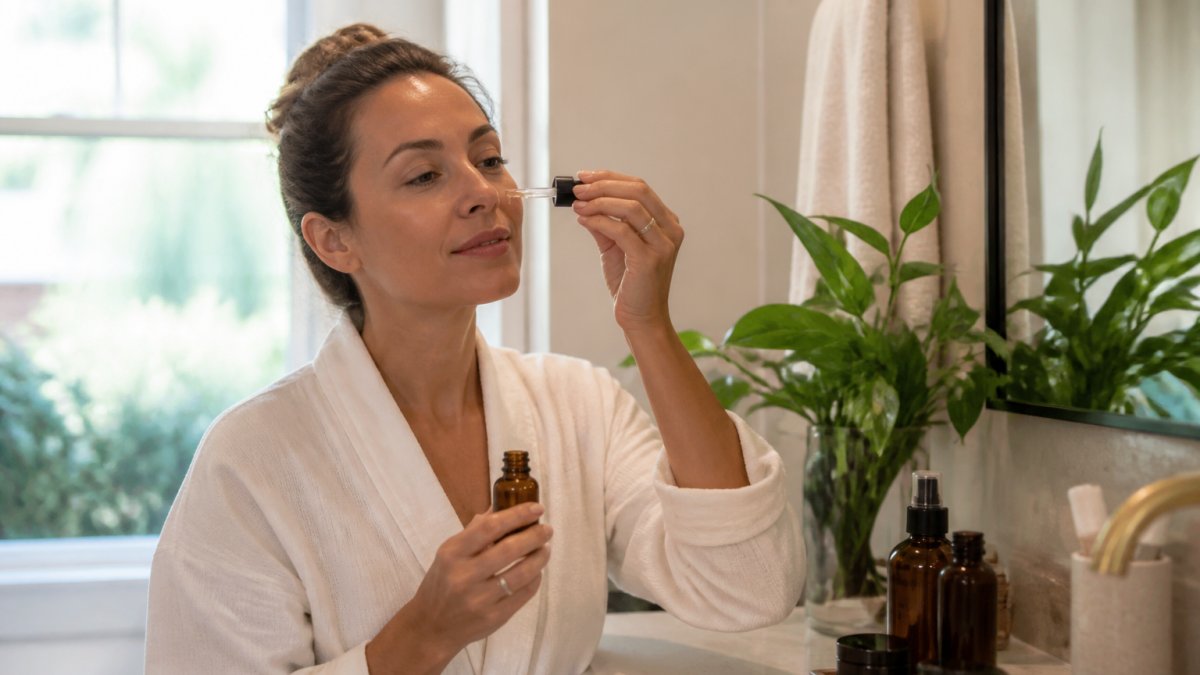
A plant-based skincare routine for beginners needs three steps, not ten: cleanse, treat, moisturize. Adding more products before you understand your skin is the fastest route to irritation.
The Order That Actually Matters
Apply products from thinnest to thickest. Water-based formulas go first because they need direct skin contact to absorb; oil-based formulas go last because they form an occlusive layer that blocks anything applied after.
That's why facial oil belongs at the end of the evening routine, not the beginning, even though it feels like the most "active" product in the lineup.
A Beginner Sequence Using Our Lineup
- Morning: Rinse with lukewarm water, or use the Cleansing Face Milk with Oat Powder + Aloe Vera ($30.00) if your skin feels tight or reactive. Follow with moisturizer.
- Evening, step one: Cleanse with the formula matched to your skin type (see the skin-type section above).
- Evening, step two (two to three times weekly): Exfoliate with the Bamboo Microdermabrasion Exfoliating Cleanser ($23.00). On exfoliation nights, skip the facial oil, lactic acid and a heavy occlusive layer compete for the same surface.
That last step is the one most routines skip. Your skin tells you whether a formula works within two weeks. Pay attention.
Bakuchiol Skin Renewing Facial Oil (Retinol Alternative) →
The Mistake Beginners Make With Plant-Based Actives
Plant-derived actives aren't automatically gentler than synthetics, they're just differently formulated. Bakuchiol suits most sensitive skin types but still belongs in an evening routine, since cell-turnover support works with the skin's overnight repair cycle.
People switching from conventional routines often treat every plant-based product as interchangeable and stack them all at once. Start with one new product, use it two weeks, then add the next.
How Long Before You Know It's Working
Hydration and barrier support show up fastest, most people notice less tightness within a week of switching cleansers. Cell-turnover changes from bakuchiol or lactic acid take four to six weeks, because they influence how skin renews itself rather than delivering an immediate surface effect. Judge those products on that timeline, not the first few days.
Price-Per-Ounce and Sustainability: What You're Paying For
Price-per-ounce analysis exposes what sticker prices hide. Most alternatives lists compare sticker prices and stop there, which is exactly why they mislead. Two $45.00 cleansers can cost you double or half depending on format.
The Math, Product by Product
Using our own lineup, here's what each product actually costs per fluid ounce or per ounce of product:
- "CuCu" Cucumber Cleanser, $45.00 for 3.4 fl. oz., roughly $13.24 per fluid ounce
- "Berry Ripe" Strawberry Cleanser, $45.00 for 6.7 fl. oz., about $6.72 per fluid ounce
- Cedarwood & Coconut Whipped Body Butter, $20.00; body products are applied in larger amounts than facial products, so per-ounce cost matters more here than per-use cost
The pattern worth noticing: our lowest-priced pick is a body butter, and our highest-priced picks are facial cleansers. That's not an accident. Facial formulas carry more formulation work and smaller batch sizes, which is exactly why price-per-ounce comparisons matter more than sticker price alone.

How to Run This Math on Any Brand
Divide the price by the listed volume or weight, then by how many uses you get per container. A $45.00 cleanser used twice daily for three months costs about $0.50 per use; a $20.00 cleanser used twice daily for one month costs about $0.33 per use, cheaper per bottle, more expensive per year. The formula is simple; the discipline to run it is what most shoppers skip.
Sustainability Beyond the "Vegan" Label
A vegan label tells you what isn't in a formula, nothing about what happens to the packaging after the product is gone. That's the gap most alternatives lists leave open, and the one that matters for a lifecycle comparison.
Three packaging choices carry the most weight:
- Glass over plastic. Glass jars with aluminum lids are widely recyclable and can be reused for storage. Plastic pumps and tubes are often multi-material and end up in landfill even when marked recyclable.
- Refill and reuse. Reusing a container before recycling it extends its useful life and reduces the energy spent producing a replacement. EPA information on reducing waste through reuse and recycling outlines why reuse sits above recycling in the waste hierarchy.
- Upcycled ingredients. Upcycled oat powder and date seed extract use material that would otherwise be discarded, which reduces the agricultural footprint of the ingredient itself rather than just the packaging around it.
A brand can be fully vegan and still ship in non-recyclable plastic. If sustainability is part of why you're switching, check the packaging spec, not just the ingredient list.
What This Means for Your Switch
Run the per-ounce math on the products you're considering, then check the packaging material before you commit. A slightly higher sticker price on a larger format in a glass jar can cost less per year and generate less waste than a cheaper plastic bottle you replace monthly, the outcome most shoppers actually want when they search for alternatives.
Conclusion: Choosing Your Plant-Based Skincare Swap
The hardest part of switching isn't finding alternatives, it's trusting that a gentler formula will perform. That doubt is reasonable, and the honest answer is to start with one product matched to your skin type and give it two weeks.
Wellnessandnaturalskin builds formulas around pure, plant-based botanical ingredients, free from harsh chemicals and artificial toxins, sourced from vetted suppliers.
Shop now and build a routine your skin can actually keep up with.
Frequently Asked Questions
What are the best plant-based skincare brands for sensitive skin?
Look for formulas that skip common irritants like synthetic fragrance, sulfates, and PEGs, and that carry a dermatological approval for sensitive skin. The Cleansing Face Milk with Oat Powder + Aloe Vera ($30.00) is dermatologically approved for sensitive skin, and the Bamboo Microdermabrasion Exfoliating Cleanser ($23.00) is designed for sensitive, acne-prone, and eczema-prone skin. Both are vegan and free from parabens, sulfates, silicones, and artificial dyes.
How do I identify truly clean, plant-based beauty products?
Start with the full ingredient list, not the front label. A clean beauty ingredient guide approach means checking for plant-derived oils, botanical extracts, and natural preservatives, then scanning for parabens, sulfates, silicones, artificial color, artificial fragrance, and PEGs. Transparent labeling matters: brands that list every ingredient and its source give you something to verify. The Bakuchiol Skin Renewing Facial Oil ($35.00) lists its full botanical blend, including kiwi seed oil, jojoba, and chia seed oil.
Are plant-based skincare products as effective as chemical-based ones?
For many concerns, yes. Bakuchiol, derived from the babchi plant, is used in the Bakuchiol Skin Renewing Facial Oil ($35.00) to visibly smooth fine lines, improve texture, and enhance firmness without the irritation or dryness retinol can cause. Botanical extracts and organic oils can deliver antioxidant-rich, hydrating results, though results vary by formula and how consistently you use it. The trade-off is usually gentleness and ingredient transparency rather than raw strength.
How do I build a sustainable plant-based skincare routine without wasting money?
Keep it to three or four steps: cleanse, treat, moisturize, and exfoliate two to three times a week. A plant-based skincare routine for beginners can start with the Cleansing Face Milk with Oat Powder + Aloe Vera ($30.00), the Bakuchiol Skin Renewing Facial Oil ($35.00) at night, and the Bamboo Microdermabrasion Exfoliating Cleanser ($23.00) on rotation. Buying fewer, multi-purpose products reduces waste and keeps shelf-life risk low.
What ingredients should I avoid in non-vegan skincare?
Common non-vegan ingredients include beeswax, honey, lanolin, carmine, and collagen. If you want a fully vegan formula, check the label for these. The Bakuchiol Skin Renewing Facial Oil ($35.00) and the Bamboo Microdermabrasion Exfoliating Cleanser ($23.00) are both vegan and cruelty-free, and neither lists animal-derived ingredients. Note that some body butters do contain beeswax or honey, so read each product page before buying.