
Table of Contents
- Why Sensitive Skin Needs a Different Approach
- How We Chose These Sensitive Skin Alternatives
- Sensitive Skin Alternatives Compared: Price, Size, and Key Actives
- How to Fix a Damaged Skin Barrier With Natural Ingredients
- Best Vegan Skincare for Sensitive Skin in This Lineup
- How to Patch Test a New Product (And What to Avoid)
- Where Each Pick Fits Your Skin and Your Budget
- Conclusion
- Frequently Asked Questions
Last Updated: September 29, 2026
Why Sensitive Skin Needs a Different Approach
Sensitive skin reacts to what most formulas treat as harmless. Fragrance, essential oils, synthetic dyes, and harsh surfactants can all trigger redness, stinging, and irritation in skin that struggles to defend itself. That is why finding Pacifica beauty alternatives for sensitive skin starts with understanding the skin barrier, not with the label on the front of the bottle.
How We Chose These Sensitive Skin Alternatives
Every pick here meets the same bar: fragrance-free or low-fragrance, free of the most common irritants, and suited to a compromised barrier. We prioritized formulas with soothing agents like ceramides, oat extract, and botanical extracts over anything relying on synthetic dyes or heavy silicones.
- Ingredient transparency and cross-referencing against known irritants
- Texture and absorption rate for daily use
- Vegan and cruelty-free certifications where applicable
- Price per ounce, not just sticker price
Sensitive Skin Alternatives Compared: Price, Size, and Key Actives
Here is how the lineup stacks up on the factors that decide a purchase: what it costs, how much you get, and what is actually inside.
| Product | Price | Size | Key Actives |
|---|---|---|---|
| Fragrance Free Skincare Routine Essentials Kit | $133.95 | 5-piece bundle | Tallow, honey, pomegranate, emu oil |
| Pure Tallow Balm | $24.00 | Balm | Grass-fed tallow, olive oil |
| Face & Body Cleansing Bar | $17.00 | Bar | pH-balanced, fragrance-free |
| Whipped Shea Body Butter | $21.99 | Body care | Shea butter, colloidal oatmeal, rice bran oil |
| Emu Oil Oatmeal Rosacea Soap | $16.00 | Bar | Emu oil, oat kernel meal, chamomile |
| Eminence Calm Skin Chamomile Cleanser | $48.00 | 8.4 oz | Chamomile, arnica, calendula |
| Vitamin C Serum for Sensitive, Mature Skin | $49.00 | 30 ml | Vitamin C, ferulic acid, hyaluronic acid |
How to Fix a Damaged Skin Barrier With Natural Ingredients
Repairing a damaged barrier comes down to three things: stop stripping it, add back the lipids it is missing in the right ratio, and give it enough time to rebuild. Most people skip the first step, then wonder why a new moisturizer is not fixing anything.

What a Damaged Barrier Actually Looks Like at the Ingredient Level
The barrier is a brick-and-mortar structure. Corneocytes are the bricks, and the mortar is a lipid matrix made mostly of ceramides, cholesterol, and free fatty acids in roughly a 1:1:1 ratio. When that ratio drifts, usually because harsh surfactants, fragrance, or over-exfoliation strip lipids faster than skin can replace them, transepidermal water loss rises, irritants penetrate more easily, and the same product that used to be fine suddenly stings.
Ingredient-Level Cross-Reference: What to Look For and Why
Most alternatives lists tell you to look for "soothing ingredients." A more useful approach is to match the ingredient to the specific barrier function it supports:
- Ceramides (especially ceramide NP, AP, and EOP): Replace missing intercellular lipids. Look for them paired with cholesterol and fatty acids, not ceramides alone, a ceramide-only formula can actually worsen the ratio imbalance.
- Colloidal oatmeal: Recognized by the FDA as a skin protectant. The beta-glucans and avenanthramides reduce visible redness and itch without occluding the barrier.
- Shea butter and other emollients: Fill the gaps between corneocytes and slow water loss. Unrefined shea retains more of its natural unsaponifiables than refined versions.
- Hyaluronic acid and glycerin: Humectants that pull water into the upper layers. They support hydration but do not repair the lipid matrix on their own, pair them with an emollient or occlusive.
- Niacinamide: Supports ceramide synthesis and reduces redness over time. Well tolerated by most reactive skin at 2-5%; higher concentrations can sting.
- Panthenol and allantoin: Soothing agents that reduce the sensation of irritation during the rebuild window.
What to Stop Using First
Before adding anything, remove the inputs that keep re-injuring the barrier:
- Physical scrubs and cleansing brushes
- AHA, BHA, and retinoid actives
- Foaming cleansers with sulfates
- Fragrance and essential-oil-heavy formulas
- Hot water and long showers
A Four-Week Barrier Repair Routine
A simple four-week structure works better than a cabinet full of products:
- Week 1: Switch to the Face & Body Cleansing Bar only. Drop all actives. Use lukewarm water.
- Week 2: Add the Pure Tallow Balm at night to restore lipids. Apply to slightly damp skin to lock in water.
- Week 3: Introduce the Emu Oil Oatmeal Rosacea Soap for gentle cleansing twice weekly if redness is the main concern.
- Week 4: Add the Vitamin C Serum every other morning, with SPF on top. If stinging returns, drop back to Week 2 for another week.
What Long-Term Repair Actually Looks Like
Most guides stop at the purchase decision. The more useful question is what changes over 8 to 12 weeks of consistent barrier care:

- Weeks 1-2: Stinging and tightness decrease. Redness may still be visible.
- Weeks 3-4: Skin holds moisture longer between applications. Fewer reactive flare-ups to the same triggers.
- Weeks 6-8: Tolerance to previously irritating ingredients often returns. This is when most people can reintroduce one active at a time.
- Weeks 8-12: Barrier function stabilizes. The routine that felt restrictive in Week 1 now feels normal.
Best Vegan Skincare for Sensitive Skin in This Lineup
Vegan formulas avoid animal-derived ingredients, but vegan does not automatically mean gentle. The real test is whether a product is fragrance-free, cruelty-free, and free of the dyes and sulfates that set off reactive skin.
Three picks in this lineup fit that brief:
- Vitamin C Serum for Sensitive, Mature Skin ($49.00): vegan, cruelty-free, fragrance-free, gluten-free
- Eminence Calm Skin Chamomile Cleanser ($48.00): cruelty-free, no parabens, sulfates, or synthetic dyes
- Whipped Shea Body Butter ($21.99): plant-based shea, colloidal oatmeal, and rice bran oil
How to Patch Test a New Product (And What to Avoid)
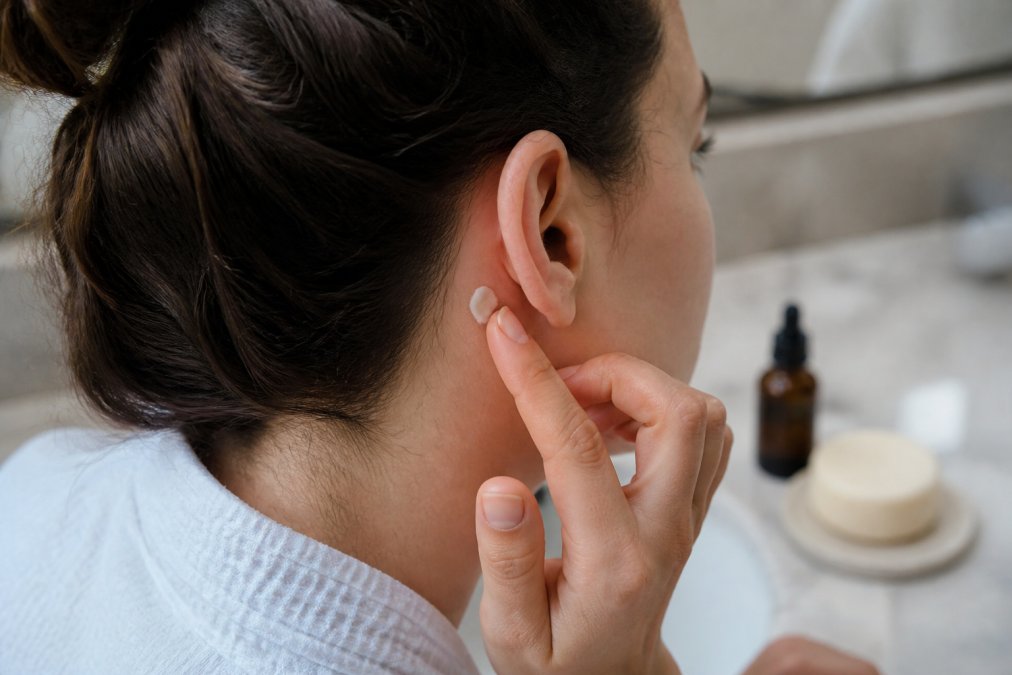
A patch test is the only reliable way to know whether a product will irritate your skin before you commit to it. Most guides give one instruction, "test behind the ear for 24 hours", and stop there. A more rigorous protocol gives you a clearer answer.
Sensitive Skin Fragrance Free Skincare →
The Two-Phase Patch Test Protocol
Phase 1, Repeated open application test (ROAT). Apply a small amount (about the size of a pea) to the same 1-inch square of skin twice daily for 7 to 10 days. The inner forearm or the side of the neck works well. This phase catches delayed contact allergy, which is the most common reason a product seems fine for a week and then suddenly is not.
Why 24 Hours Is Not Enough
Irritant contact dermatitis, the kind caused by surfactants, acids, or fragrance, usually shows up within minutes to hours. Allergic contact dermatitis, which is what most people actually worry about, is a delayed reaction. It can take 48 to 72 hours to surface on first exposure, and sometimes longer. Testing for one day and calling a product safe skips the window where most reactions appear.
What to Avoid During the Test Window
- Applying the product to broken, sunburned, or freshly exfoliated skin
- Testing two new products on the same day, you will not know which one caused the reaction
- Testing on the face first, where reactions are most visible and hardest to hide
- Changing anything else in your routine during the test window
- Ignoring mild tingling that lasts more than a few minutes
- Testing a product you already reacted to, even if the formula was "reformulated"
How to Read the Result
- No reaction after 7-10 days of ROAT: Proceed to the use test.
- Mild redness or itching that fades within an hour: Likely irritation, not allergy. Discontinue and retry after the barrier is stronger.
- Redness, swelling, bumps, or itching that persists or worsens: Stop use. This pattern suggests contact allergy and is unlikely to resolve with continued use.
- Burning or stinging without visible redness: Often a sign of a compromised barrier rather than a true allergy. Pause actives and rebuild before retesting.
If irritation appears, stop use. According to the FDA's guidance on cosmetic product safety and adverse reactions, consumers should report unexpected reactions to a product so regulators can track patterns.
A Note on "Hypoallergenic" and "Dermatologist-Tested"
Neither term is regulated the way most shoppers assume. "Hypoallergenic" has no legal definition for cosmetics, and "dermatologist-tested" does not specify how many people were tested, for how long, or with what result. Treat both as marketing signals, not safety guarantees. The ingredient list and your own patch test are the only reliable evidence you have.
Where Each Pick Fits Your Skin and Your Budget
Matching product to skin type matters more than matching price. Here is where each pick earns its place:
- Oily, reactive skin: Face & Body Cleansing Bar ($17.00), then Vitamin C Serum ($49.00)
- Dry, eczema-prone skin: Whipped Shea Body Butter ($21.99) plus Pure Tallow Balm ($24.00)
- Rosacea-prone skin: Emu Oil Oatmeal Rosacea Soap ($16.00) or Eminence Chamomile Cleanser ($48.00)
- Full routine, one purchase: Fragrance Free Skincare Routine Essentials Kit ($133.95)
Conclusion
Choosing Pacifica beauty alternatives for sensitive skin comes down to reading ingredients, not marketing. Fragrance-free formulas, barrier-supporting emollients, and a proper patch test will do more for reactive skin than any single product.

Frequently Asked Questions
What is the best skincare brand for sensitive skin?
There is no single best brand, but a safe starting point is a short, fragrance-free routine built around barrier-supporting ingredients. Look for products labeled hypoallergenic, non-comedogenic, and free of synthetic dyes and sulfates. The Sensitive Skin Fragrance Free Skincare Routine Essentials Kit at $133.95 covers a soap bar, toner, two serums, and a tallow cream. Patch test each new product for 24 hours before adding the next one.
How do I choose natural skincare for reactive skin?
Read the full ingredient list, not the front label. Prioritize humectants like glycerin and hyaluronic acid, emollients like shea butter and tallow, and soothing agents such as colloidal oatmeal, chamomile, and feverfew. Avoid fragrance, synthetic dyes, and sulfate-heavy cleansers. For reactive skin, a fragrance-free, pH-balanced cleansing bar at $17.00 is a lower-risk first step than a foaming gel, because it cleans without stripping the lipid barrier.
How do I fix a damaged skin barrier with natural ingredients?
Strip your routine down to a gentle cleanser and a rich moisturizer for two to four weeks, then reintroduce one active at a time. Ingredients that support the lipid barrier include ceramides, colloidal oatmeal, shea butter, and tallow. The Whipped Shea Body Butter with Colloidal Oatmeal at $21.99 is formulated for dry, eczema-prone skin and helps calm visible redness. Skip exfoliants and vitamin C until redness and stinging settle.
What is the best vegan skincare for sensitive skin?
Vegan formulas avoid animal-derived ingredients, but vegan does not automatically mean gentle. Look for vegan, cruelty-free, fragrance-free products with short ingredient lists. The Vitamin C Serum for Sensitive, Mature Skin at $49.00 is vegan, cruelty-free, fragrance-free, and formulated without nut oils and the 14 most common allergens, so it suits reactive and eczema-prone skin. Start every other day and always patch test first.
How long should I patch test a new sensitive skin product?
Apply a small amount behind the ear or on the inner elbow and wait for a reaction before using it on your face. If you see no redness, itching, or swelling, begin with once-daily use for a week. Reactions to barrier products can take several days to appear, so add only one new product at a time and keep the rest of your routine unchanged. Discontinue immediately if irritation develops.